
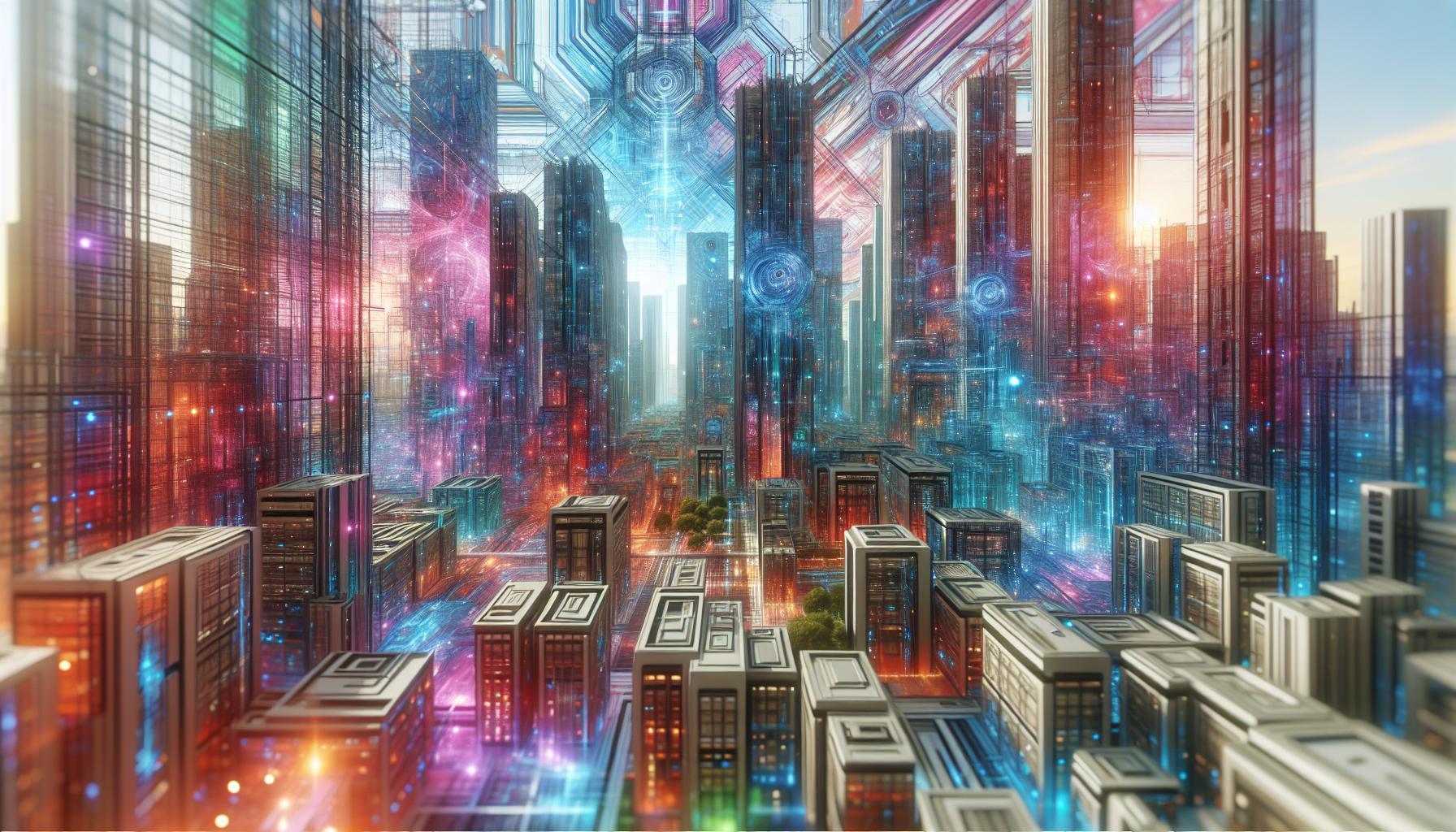
As I delve into the world of AI-generated imagery, I’m struck by the revolutionary impact it’s having on visual storytelling. We’re witnessing the dawn of a new era where creativity knows no bounds and imagination reigns supreme.
AI photos are transforming the way we create and consume visual content. From hyper-realistic portraits to fantastical landscapes that defy reality, these AI-generated images are pushing the boundaries of what’s possible in visual art. They’re not just changing how we tell stories; they’re redefining the very nature of storytelling itself.
This technology is opening up exciting possibilities for artists, marketers, and content creators alike. It’s democratizing the creative process, allowing anyone with an idea to bring their vision to life with stunning clarity and detail. As we explore this new frontier, we’ll uncover the potential and challenges that lie ahead in this AI-driven visual revolution.
The Rise of AI in Photography
As AI technology continues to advance, it’s making significant inroads into the world of photography. This emerging field is reshaping how we create, edit, and interact with images, ushering in a new era of visual storytelling.
Understanding AI Image Generation
AI image generation is a groundbreaking technology that uses complex algorithms and machine learning to create images from text descriptions or other input data. This process, known as text-to-image synthesis, allows users to generate unique visuals simply by describing what they want to see. I’ve found that AI-generated images can range from photorealistic scenes to fantastical artworks, pushing the boundaries of what’s possible in visual creation.
The technology behind AI image generation relies on vast datasets of existing images and sophisticated neural networks. These systems learn to recognize patterns and relationships between text descriptions and visual elements, enabling them to produce images that match given prompts with remarkable accuracy.
Key Technologies Driving AI Photography
Several key technologies are propelling the AI revolution in photography:
- Generative Adversarial Networks (GANs): These AI systems consist of two neural networks that work against each other – one generates images while the other critiques them improving the output quality over time.
- Diffusion Models: This newer approach gradually adds and removes noise from an image iteratively refining it to match the desired output.
- Transformer Models: Originally developed for natural language processing these models have been adapted for image generation tasks with impressive results.
- Neural Style Transfer: This technology allows AI to apply the style of one image to the content of another creating unique artistic renditions.
| Technology | Primary Function | Notable Examples |
|---|---|---|
| GANs | Image Generation | DALL-E StyleGAN |
| Diffusion Models | Image Refinement | Stable Diffusion Midjourney |
| Transformer Models | Text-to-Image Synthesis | CLIP GPT-3 |
| Neural Style Transfer | Artistic Rendering | DeepArt Prisma |
These technologies are not only transforming how professional photographers work but are also democratizing image creation. Today AI photos are becoming increasingly prevalent in various fields from digital art to marketing. Some photographers and artists are even exploring the potential of selling stock photos created by AI pushing the boundaries of traditional photography and stock image markets.
As AI continues to evolve its impact on photography and visual storytelling is likely to grow offering new possibilities for creativity and expression while also raising important questions about authorship authenticity and the future of human-created art.
Transforming Visual Storytelling
AI-generated imagery is revolutionizing the way we craft and consume visual narratives. This technology is not only expanding creative possibilities but also reshaping how brands connect with their audiences.
Crafting Emotional Visuals
AI photos today are pushing the boundaries of emotional storytelling. I’ve observed how these tools can generate images that evoke powerful feelings simply from text descriptions. For instance AI can create a serene sunset scene that captures the warmth and nostalgia of summer evenings or produce a haunting image that conveys deep sorrow. This capability allows storytellers to illustrate complex emotions that were once challenging to capture through traditional photography.
The technology’s ability to blend different styles and elements also opens up new avenues for visual metaphors. Creators can now easily produce surreal imagery that combines realistic elements with fantastical ones resulting in visuals that speak to deeper truths or abstract concepts. This fusion of reality and imagination enables a more nuanced and impactful form of visual communication.
Enhancing Branding and Marketing
In the realm of branding and marketing AI-generated imagery is proving to be a game-changer. I’ve seen how businesses are leveraging this technology to create consistent high-quality visuals that align perfectly with their brand identity. The ability to generate on-brand images quickly and at scale is particularly valuable for content marketing and social media strategies.
Moreover the rise of AI in photography has implications for the stock photo industry. While selling stock photos remains a viable business many marketers are turning to AI-generated images for their campaigns. These AI-created visuals offer several advantages:
| Advantages of AI-Generated Images in Marketing |
|---|
| Customization to specific brand needs |
| Cost-effectiveness compared to custom photoshoots |
| Rapid production of diverse imagery |
| Ability to create conceptual visuals easily |
However it’s important to note that AI-generated imagery also raises questions about authenticity and originality in branding. As this technology becomes more prevalent marketers must navigate the balance between leveraging AI’s creative potential and maintaining a genuine connection with their audience.
Applications Across Photography Genres
AI-generated imagery is revolutionizing various photography genres, offering new possibilities and enhancing creative expression. I’ll explore how AI is transforming different areas of photography, from capturing nature’s beauty to documenting human experiences.
Landscape and Wildlife
AI has significantly impacted landscape and wildlife photography, offering tools that enhance image quality and capture elusive moments. Today, AI photos in this genre are pushing the boundaries of what’s possible:
- Automatic scene recognition: AI algorithms can identify different elements in a landscape, optimizing camera settings for the best shot.
- Wildlife detection: Advanced AI systems can track and focus on animals, even in challenging environments, ensuring sharp images of fast-moving subjects.
- Image stacking: AI-powered software can combine multiple exposures to create stunning HDR landscapes with perfect dynamic range.
- Weather prediction: Some AI tools can analyze weather patterns to suggest optimal shooting times for landscape photographers.
Portrait and Documentary
In portrait and documentary photography, AI is enhancing both the capture and post-processing stages:
- Facial recognition: AI can identify and track faces, ensuring perfect focus and exposure in portraits.
- Emotion analysis: Some AI systems can detect and emphasize emotions in documentary photos, helping to tell more powerful stories.
- Skin retouching: AI-powered editing tools can perform natural-looking skin retouching, saving time in post-processing.
- Cultural sensitivity: AI is being developed to assist in creating more inclusive and diverse representations in documentary photography.
Street and Fashion
Street and fashion photography are benefiting from AI’s ability to capture fleeting moments and enhance aesthetic appeal:
- Real-time style transfer: AI can apply artistic styles to street photos in real-time, creating unique visual interpretations.
- Crowd detection: AI algorithms can identify interesting crowd patterns or isolate subjects in busy street scenes.
- Virtual try-ons: In fashion photography, AI enables virtual clothing fittings, revolutionizing e-commerce and editorial shoots.
- Trend analysis: AI can analyze fashion trends from street photos, informing designers and marketers.
Architectural and Fine Art
AI is transforming architectural photography and pushing the boundaries of fine art:
- Perspective correction: AI can automatically correct distortions in architectural photos, ensuring straight lines and accurate proportions.
- 3D modeling: From 2D images, AI can generate 3D models of buildings, useful for both documentation and artistic interpretation.
- Style generation: In fine art, AI can create new artistic styles or blend existing ones, opening up new avenues for creative expression.
- Restoration and colorization: AI tools can restore old architectural photos or add color to black and white images, bringing history to life.
As AI photos today continue to evolve, they’re not only enhancing these genres but also creating new opportunities for selling stock photos. The ability to generate diverse, high-quality images across various photography styles is reshaping the stock photography market, offering photographers new avenues to monetize their creativity and technical skills.
AI-Powered Photo Editing
AI technology is revolutionizing the way we approach photo editing offering unprecedented possibilities for enhancement and creativity. This section explores how AI is streamlining post-production processes and providing precision guidance in photo editing.
Streamlining Post-Production Processes
AI-powered tools are transforming the photo editing landscape making complex tasks more accessible and efficient. Today AI photos are becoming increasingly sophisticated allowing even novice photographers to achieve professional-looking results. These intelligent algorithms can automatically adjust exposure color balance and contrast saving hours of manual work. I’ve found that AI-driven software can now seamlessly remove unwanted objects from images perform advanced sky replacements and even generate realistic fill content for expanded scenes.
One of the most impressive features I’ve encountered is AI-powered batch processing. This allows photographers to apply consistent edits across multiple images simultaneously maintaining a cohesive look for entire photo sets. For those selling stock photos this capability is invaluable as it enables rapid production of large image collections while ensuring uniformity in style and quality.
Precision in AI Guidance
AI’s role in photo editing goes beyond automation; it offers precise guidance for achieving optimal results. Advanced AI algorithms can analyze images and provide tailored recommendations for improvements. I’ve seen systems that can detect and correct issues like noise reduction sharpening and lens distortion with remarkable accuracy.
Moreover AI-powered tools now offer intelligent selective adjustments. They can identify specific elements within an image such as faces landscapes or objects and apply targeted enhancements. This level of precision was once the domain of skilled professionals but is now accessible to a wider range of users thanks to AI guidance.
For photographers selling stock photos AI guidance is particularly beneficial. It helps ensure that images meet the technical standards required by stock agencies optimizing factors like composition lighting and subject focus. By leveraging these AI-driven insights photographers can increase the marketability of their work and improve their success in the competitive stock photography market.
Ethical Considerations and Challenges

As AI-generated imagery becomes more prevalent in visual storytelling, it brings forth a host of ethical considerations and challenges. I believe it’s crucial to address these issues to ensure responsible use of this transformative technology.
Copyright and Intellectual Property
The rise of AI photos today has blurred the lines of authorship and ownership, raising complex questions about copyright and intellectual property rights. I’ve observed that determining who owns the rights to an AI-generated image – the AI developer, the user who prompted the creation, or the AI itself – is a contentious issue. This uncertainty has significant implications for those selling stock photos, as the traditional model of licensing and attribution is being challenged.
Many stock photo platforms are grappling with how to handle AI-generated content. Some have banned it outright, while others are developing new policies to accommodate this emerging category. I think it’s essential for photographers and content creators to stay informed about these evolving policies to protect their work and understand the changing landscape of visual content licensing.
Addressing Bias and Stereotypes
AI image generation algorithms are trained on vast datasets of existing images, which can inadvertently perpetuate societal biases and stereotypes. I’ve noticed that this issue is particularly relevant in the context of AI photos today, where generated images might reinforce harmful representations of certain groups or cultures.
To combat this, I believe it’s crucial for AI developers to actively work on diversifying their training data and implementing bias detection and mitigation strategies. For users of AI image generation tools, especially those involved in selling stock photos, it’s important to be aware of these potential biases and make conscious efforts to promote inclusive and diverse representations in their work.
Additionally, as AI-generated imagery becomes more prevalent in stock photography, there’s a growing responsibility for both creators and consumers to critically evaluate the images they use and ensure they’re not inadvertently promoting stereotypes or misrepresentations. This challenge underscores the ongoing need for human oversight and ethical considerations in the age of AI-powered visual storytelling.
The Future of AI in Visual Storytelling
As AI technology continues to advance, the future of visual storytelling looks increasingly dynamic and innovative. I believe we’re on the cusp of a new era in creative expression, where AI will play a pivotal role in shaping how we create, consume, and interact with visual content.
Emerging Trends and Innovations
In the realm of AI photos today, we’re seeing rapid advancements that are set to redefine visual storytelling. One of the most exciting trends is the development of more sophisticated text-to-image generation models. These AI systems are becoming increasingly adept at understanding complex prompts and producing highly detailed, contextually accurate images. I expect that in the near future, we’ll see AI capable of generating entire visual narratives from written stories or scripts, opening up new possibilities for filmmakers, advertisers, and content creators.
Another emerging trend is the integration of AI with augmented and virtual reality technologies. This convergence will likely lead to immersive storytelling experiences where AI-generated visuals adapt in real-time to user interactions or environmental factors. Imagine walking through a virtual art gallery where each piece is uniquely generated for you based on your personal preferences and emotional state.
Impact on Creative Industries
The impact of AI on creative industries is already significant, and I anticipate this influence will only grow stronger. For photographers and visual artists, AI is becoming an indispensable tool for enhancing creativity and streamlining workflows. When it comes to selling stock photos, AI is revolutionizing the market by enabling the creation of diverse, on-demand imagery that can meet specific client needs almost instantly.
I foresee AI playing a crucial role in personalized content creation. Marketers and advertisers will leverage AI to generate tailored visual content for individual consumers, dramatically increasing engagement and conversion rates. This shift towards hyper-personalization will likely reshape how brands approach visual storytelling in their campaigns.
In the film and gaming industries, AI will probably become integral to visual effects and character creation. We may see AI systems capable of generating realistic characters and environments on the fly, reducing production times and costs while expanding the scope of what’s visually possible.
However, as AI becomes more prevalent in visual storytelling, I believe we’ll also see a renewed appreciation for human creativity. The unique perspectives and emotional depth that human artists bring to their work will become even more valued, creating a symbiotic relationship between AI and human creators in the visual arts.
Conclusion: A New Era of Visual Expression
AI-generated imagery is ushering in a revolutionary phase of visual storytelling. It’s expanding creative possibilities democratizing art and transforming industries. As we embrace this technology we’re witnessing a shift in how we create consume and interact with visual content.
The future of AI in photography is bright promising enhanced creativity personalized experiences and streamlined workflows. However it also brings ethical challenges we must navigate carefully. As we move forward it’s crucial to strike a balance between technological innovation and human artistry.
This new era of visual expression offers exciting opportunities for creators marketers and consumers alike. I’m eager to see how AI will continue to shape the landscape of visual storytelling in the years to come.